
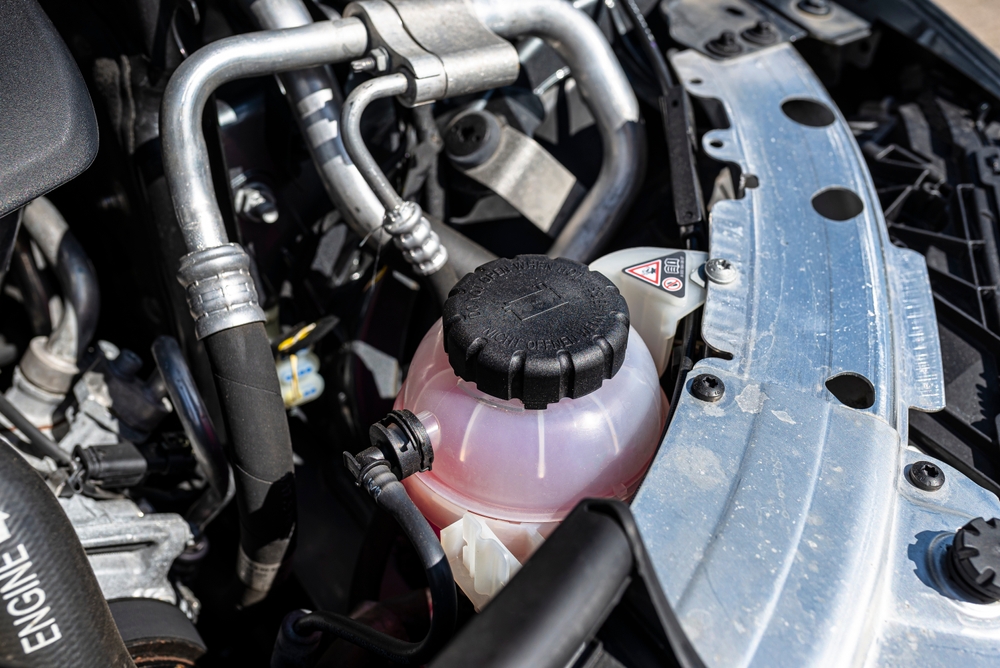
A German car coolant leak is one of the faults that German Automotive Airdrie sees most often before winter arrives, and it rarely announces itself loudly. A faint sweet smell, a slowly dropping reservoir or a temperature gauge that wanders can be the only clues. Because overheating can damage an engine quickly, it pays to understand where leaks start, how to confirm one, and what a careful repair involves.
Why a German Car Coolant Leak Is So Common
German engines run hot and tightly packaged. Many use aluminum blocks and heads, plastic coolant housings and thermostat assemblies, and compact cooling systems that fit around turbochargers and emissions equipment. These designs save weight and improve efficiency, but plastic parts age under heat and pressure.
Over time, plastic becomes brittle. Seams crack, connectors loosen and gaskets harden. A system that holds pressure at 100,000 km can leak by 150,000 km, even when the car has been well cared for. That is an industry-wide pattern, not a flaw limited to one brand.
Alberta’s temperature swings add more stress. A radiator and its hoses expand in summer heat, then shrink in sub-zero cold. Each cycle slightly flexes joints and seals.
Early Signs of a German Car Coolant Leak
Small leaks give small clues. Catching them early saves the engine and gives you time to plan a repair.
- A sweet, syrupy smell after you park, especially near the front of the car.
- A coolant level that drops slowly between top-ups.
- A low coolant warning on the dash.
- White steam from under the hood, or a hot, wet smell.
- A heater that blows cool air, or windows that fog and leave a greasy film.
- Dried crusty residue in white, pink, blue or green around hoses and fittings.
- A temperature gauge that rises in traffic and falls on the highway.
Any one of these signs justifies a closer look at the cooling system. Several together point strongly to an active leak.
Where German Cars Usually Leak From
Technicians tend to find leaks in a handful of familiar places. Knowing them helps you describe what you saw and speeds up diagnosis.
| Location | Typical warning sign | What a technician checks |
|---|---|---|
| Expansion tank and cap | Crusty residue, cap that no longer holds pressure | Seams, cap seal, pressure test |
| Water pump | Drips from the front of the engine, whine or play | Weep hole, shaft movement |
| Thermostat housing | Coolant smell, slow level loss | Housing cracks, seals |
| Radiator and hoses | Wet hoses, bulges, soft spots | Hose condition, end tanks |
| Heater core | Damp floor, fog on glass, sweet smell inside | Cabin leak, heater circuit |
| Head gasket or oil cooler | Milky oil, white smoke, pressure in system | Combustion gas, pressure tests |
A visible drip does not always sit directly beneath the leak. Coolant can run along a hose or pipe and fall somewhere else, so a proper inspection traces the full path.
Reading the Temperature Gauge and Warnings
A steady gauge in the centre is normal. Movement, however, tells a story. If the needle climbs when the car sits at a light and drops when you move, airflow or fan function may be the issue. If it climbs at highway speed, flow or pressure may be the cause.
Our article on coolant temperature fluctuations explains what different gauge patterns can point to. Meanwhile, never keep driving once the gauge enters the red zone. Even a short drive can warp a cylinder head.
What to do if the warning appears
Pull over in a safe place and switch off the engine. Wait until the engine cools before you open anything, since hot coolant sprays under pressure and can cause serious burns. Look for obvious leaks, check the reservoir level and call for assistance if the level is very low.
Why Topping Up Is Only a Short-Term Answer
Adding coolant can get you home, but it does not fix a German car coolant leak. A leak that is small today can grow quickly once a weak seam gives way.
Mixing coolant types creates another risk. German manufacturers specify particular coolant formulas, and different chemistries can react and form sludge that blocks narrow passages. Always use the type your manual calls for, and have a technician flush the system if you are unsure what is inside.
Also remember that coolant protects against freezing and corrosion. Diluting it with plain water repeatedly lowers its protection and can harm aluminum parts over time.
How a Technician Finds the Leak
Finding a German car coolant leak is more reliable with a pressure test than with guesswork. The technician connects a tester to the expansion tank and raises system pressure to the specified level. A true leak shows as a drop in pressure or as visible seepage.
For hidden leaks, UV dye can be added to the coolant. Under a UV lamp, the dye glows at the exact leak point. Combustion gas testing can check for internal leaks, such as a failing head gasket.
Data from the car’s computer adds more clues. Temperature sensors, fan operation and fault codes help separate a leak from a sensor fault or a sticking thermostat. German Automotive Airdrie uses factory-level diagnostic equipment, and the diagnostic service page explains how that testing works.
Repairs and prevention for the long term
Once the source is confirmed, the repair depends on the part. Plastic housings, hoses and expansion tanks are normally replaced rather than patched. A water pump is often replaced with its seals and, in some engines, the thermostat. After the repair, the system is refilled with the specified coolant and bled of air, since trapped air causes hot spots and false readings.
Prevention is mostly about regular attention. Check the reservoir when the engine is cold, and look under the hood for crusty residue every few months. Have hoses and the cap inspected during routine service, and replace coolant on the schedule in your owner’s manual. Our maintenance service page describes the checks that fit into regular visits.
Natural Resources Canada offers general advice on keeping vehicles efficient and in good running order on its personal vehicle resources page, including why a healthy engine matters.
An honest quote follows the assessment, so you know exactly what the repair involves before any work starts.
Frequently Asked Questions
Can I drive with a small coolant leak?
It is risky. A small leak can become a large one without warning, and overheating can damage the engine within minutes. Have the system checked soon, and carry a little of the correct coolant only for emergencies.
Why does the coolant smell sweet?
Coolant contains glycol, which has a distinct sweet odour when it heats up or drips onto hot parts. A strong smell inside the cabin may point to a heater core leak.
Is white smoke from the exhaust always a head gasket problem?
No. Thin white vapour in cold weather is often just condensation. Thick white smoke with a sweet smell and falling coolant levels is more worrying and needs a professional test.
Can I mix different coolants in a pinch?
Avoid it where possible. Different formulas can react and form deposits. If you must top up in an emergency, have the system checked and flushed afterward.
Contact German Automotive Airdrie
If you suspect a coolant leak, call 403-912-0608 to book an inspection. The shop is at 79 East Lake Cir NE, Airdrie, AB T4A 2J6, open Monday to Friday, 7:30am to 5:00pm.