
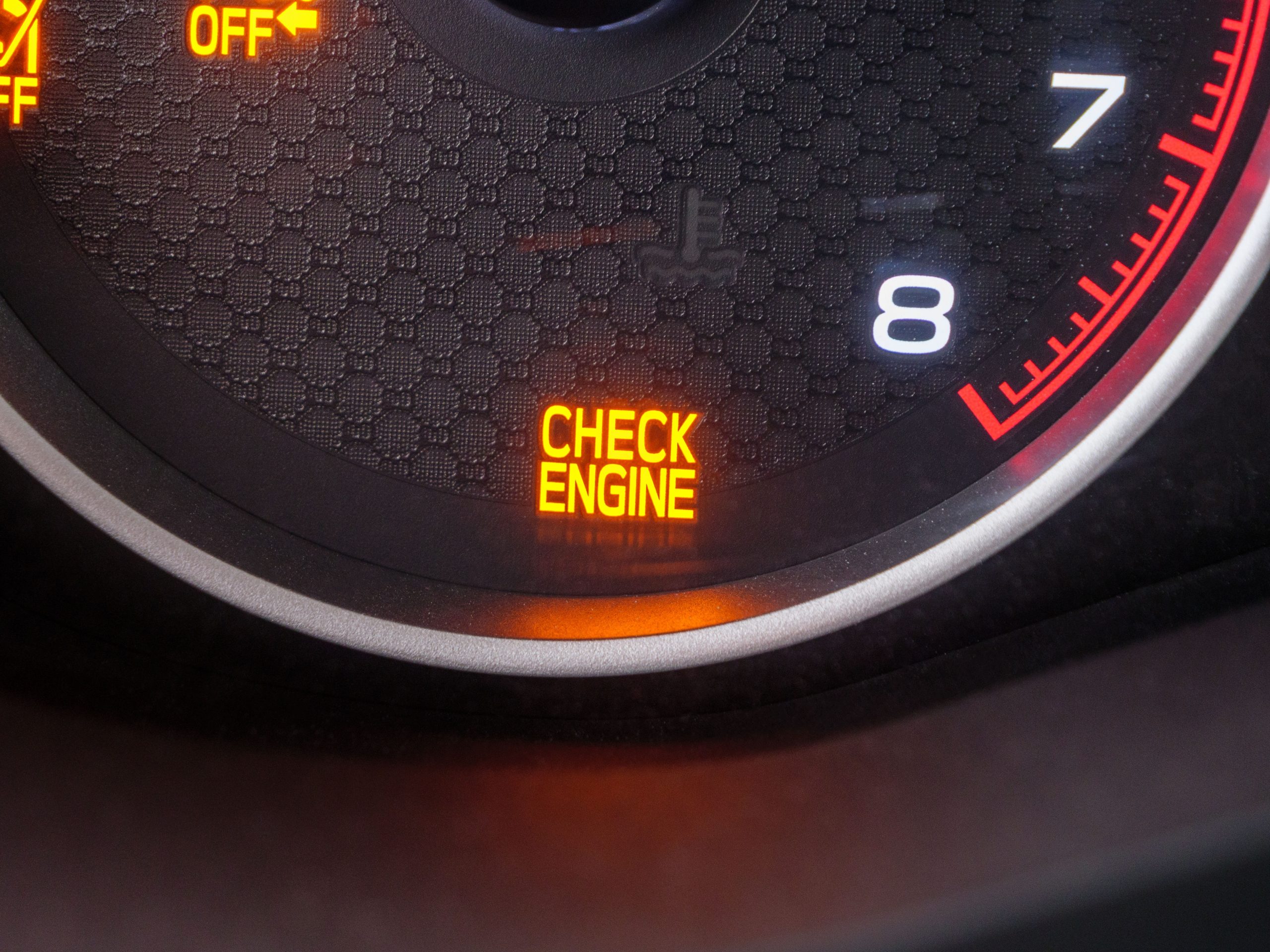
The check engine light glows amber on your dashboard. The car feels completely normal. You search online and find two hundred conflicting opinions. However, the real answer depends on which fault triggered the light — and you cannot know that without reading the code. Therefore, the light itself is not the diagnosis. It is the starting point.
What the Check Engine Light Actually Means
Your vehicle’s onboard diagnostics system — called OBD-II — monitors dozens of sensors continuously. When any reading falls outside normal parameters, the system stores a fault code and illuminates the check engine light. Specifically, this covers everything from a loose fuel cap to a failing catalytic converter to a misfiring cylinder. Consequently, the light alone tells you nothing about severity.
German Automotive Repair connects a professional-grade scanner to your vehicle’s OBD port and reads the stored codes directly. This is the only reliable way to identify the actual cause.
Steady Light vs. Flashing Light: This Distinction Matters
A steady check engine light indicates a stored fault that requires attention but does not necessarily mean stop driving immediately. However, a flashing check engine light is a different situation entirely. Specifically, a flashing light signals an active misfire — one severe enough to damage the catalytic converter in real time.
Therefore, if your check engine light flashes while driving, reduce speed and load immediately and book a professional vehicle diagnostic as soon as possible. German Automotive Repair sees catalytic converter damage regularly that resulted from drivers ignoring a flashing light for days.
The Most Common Low-Urgency Causes
Many check engine lights trigger from genuinely minor issues. For example, a loose or cracked fuel cap allows fuel vapour to escape the evaporative emissions system, which triggers an EVAP leak code. Tightening or replacing the fuel cap often resolves this. Similarly, a failing oxygen sensor affects fuel efficiency but rarely causes immediate drivability symptoms.
Furthermore, a dirty mass airflow sensor can trigger a check engine light before any driver feels a performance change. German Automotive Repair cleans or replaces MAF sensors frequently — it is one of the most cost-effective repairs on European vehicles.
Higher-Urgency Causes That Feel Normal at First
Some faults feel fine initially but escalate quickly. Specifically, a failing coolant temperature sensor can mask an overheating engine by reporting incorrect temperatures to the ECU. The car drives normally right up until the engine overheats. Similarly, a cylinder misfire at low load may be imperceptible to the driver but destroys an oxygen sensor or catalytic converter within a few hundred kilometres.
Scheduled vehicle maintenance at German Automotive Repair includes a scan for pending fault codes — faults the system has detected but not yet illuminated on the dash. Catching these early prevents the light from turning on in the first place.
Fault Codes Are a Starting Point, Not a Parts List
Here is a misconception that costs drivers unnecessary money: a fault code does not tell you which part to replace. For example, a P0420 code (catalyst efficiency below threshold) could mean a failing catalytic converter, an exhaust leak, a bad oxygen sensor, or an oil consumption issue contaminating the catalyst. Consequently, replacing the catalytic converter without proper diagnosis wastes hundreds of dollars.
German Automotive Repair uses the fault code as a direction — then performs tests, checks live data, and inspects related components to confirm the actual cause. This prevents the all-too-common situation of replacing parts that were not actually faulty.
Does a Check Engine Light Affect Safety Systems?
On most vehicles, a stored check engine light does not disable safety features like ABS, stability control, or airbags. However, certain fault conditions can trigger a cascade. Specifically, a serious engine management fault can disable traction control on some BMW and Mercedes models. Furthermore, some Audi models enter a reduced-power limp mode when specific faults occur, limiting throttle response significantly.
If additional warning lights appear alongside the check engine light, treat the situation as more urgent. German Automotive Repair triages multiple warning lights together to identify which systems interact with the primary fault.
Check Engine and Other Systems Working Together
Interestingly, several check engine triggers relate to brake and suspension system health indirectly. For example, wheel speed sensor faults — which affect ABS and traction control — sometimes store as engine management codes on certain European platforms. Therefore, a brake system check and a steering and suspension service review sometimes surface faults that contributed to a check engine light.
Before any extended summer driving, also confirm your AC system check is up to date. A refrigerant pressure sensor fault can also store engine management codes on certain models.
The Right Move Is Simple
Do not ignore the light, but do not panic either. A steady light on a car that drives normally gives you time to book a proper diagnostic appointment — ideally within a week. German Automotive Repair in Airdrie reads fault codes, interprets live data, and identifies the actual cause rather than guessing at parts. That approach saves you money and removes the anxiety of not knowing what that light actually means.
Frequently Asked Questions
Q1: Can I clear the check engine light myself with an OBD-II reader? Yes, any OBD-II reader can clear the code and turn off the light. However, the light returns within one or two drive cycles if the underlying fault persists. Clearing a code without fixing the cause only delays the diagnosis and potentially masks a worsening problem.
Q2: Will a check engine light cause me to fail a vehicle inspection? In Alberta, a vehicle inspection checks physical safety components rather than emissions compliance in the same way some provinces do. However, active warning lights affecting safety systems — like ABS or stability control — can impact roadworthiness. German Automotive Repair advises resolving all warning lights before any safety inspection.
Q3: How long can I drive with a steady check engine light? For a low-urgency code like an EVAP fault or oxygen sensor issue, driving for several days to a week while awaiting an appointment is generally acceptable. However, German Automotive Repair recommends not exceeding one to two weeks, as some codes worsen over time without driver awareness.
Q4: My check engine light came on after filling up with fuel. What happened? This is almost always an EVAP (evaporative emissions) fault triggered by a loose, missing, or faulty fuel cap. Re-tighten the cap firmly and drive for two to three days. If the light remains on, the EVAP canister or purge valve may require attention.
Q5: Can I drive through a car wash with the check engine light on? Yes. A check engine light does not affect mechanical systems relevant to a car wash. However, if other warning lights — particularly engine temperature or oil pressure — accompany the check engine light, resolve those before any non-essential activity.