
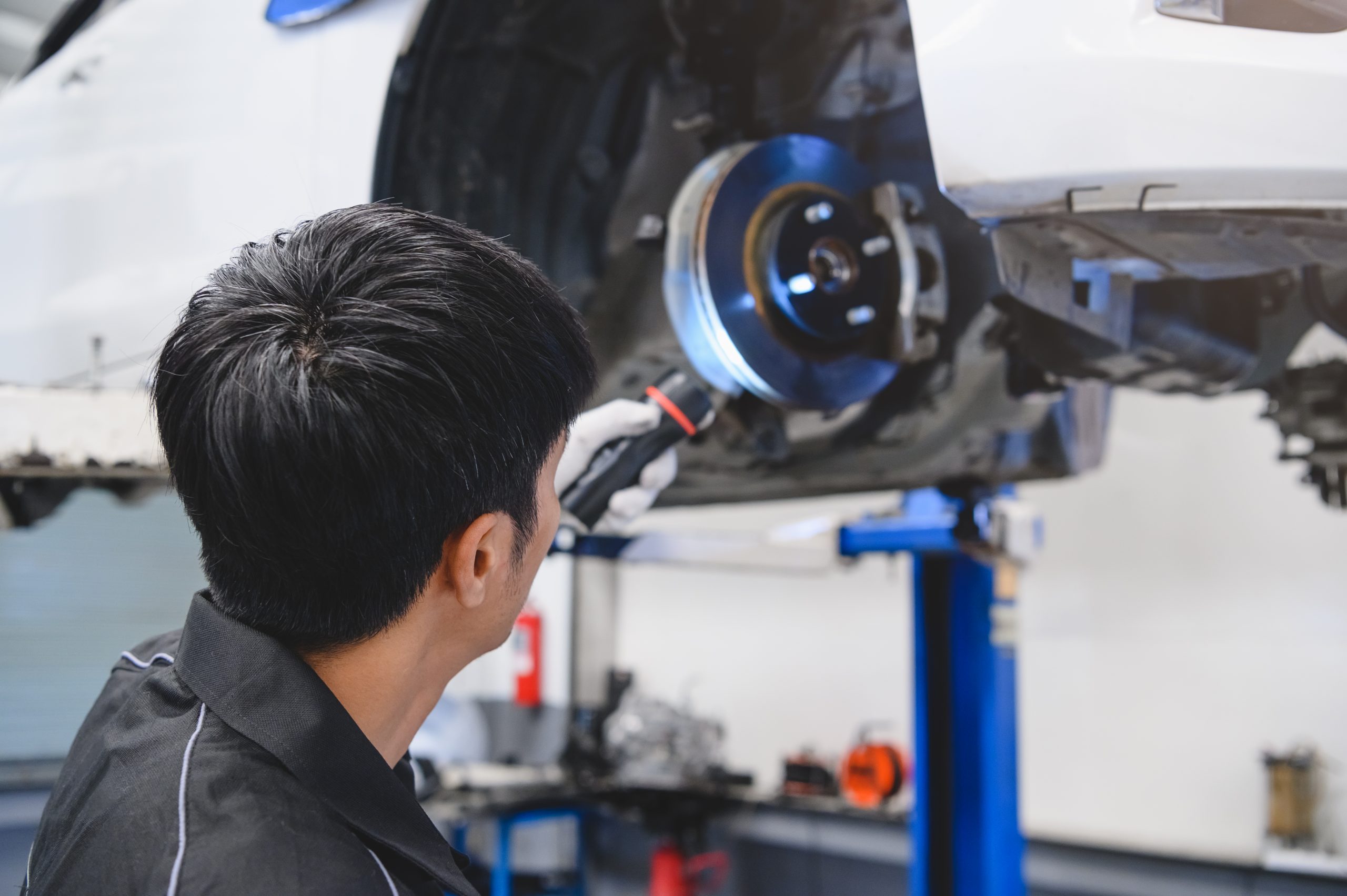
If you have ever felt your pedal change only after a sudden slowdown, hard stop brake fade is usually the reason. Therefore, the brakes can seem normal during gentle driving while a single hard stop reveals a problem that was already building.
At German Automotive Repair, we see this pattern when normal commuting never pushes the system to its limit. In other words, the first time the brakes get truly hot, weak parts or worn surfaces stop “hiding” and start showing clear symptoms.
What a hard stop really tests
A hard stop forces the pads and rotors to convert a huge amount of speed into heat in a very short time. Consequently, anything that cannot handle heat well will react right away, even if it felt fine at lower temperatures.
For example, a rotor can be slightly uneven and still feel smooth during light braking. However, when it heats up fast, that unevenness can grow and you may feel a shake, a pulsing pedal, or steering wheel vibration.
German Automotive Repair usually starts by asking when the symptom happens and how long it lasts. After that, we look for heat related clues like pad glazing, rotor hot spots, and signs of caliper drag that can overheat one wheel.
Why “fine” can be misleading
Light braking uses a smaller portion of the pad surface and creates less heat, so friction stays stable. Meanwhile, hard braking can push the pads into a different friction range, and that is where marginal parts start acting up.
That is to say, the brake system may pass your daily routine and still fail the one moment you actually need maximum stopping power. Moreover, modern vehicles can mask early issues because stability systems manage wheel slip and reduce how obvious the problem feels until the stress level spikes.
Hard stop brake fade and the heat chain reaction
Hard stop brake fade is not always a total loss of braking, but it often feels like the pedal gets longer, the car needs more distance, or the response becomes inconsistent. Therefore, it is best to treat any “only after a hard stop” symptom as a warning, not a quirk.
One common cause is overheated pads that have glazed, meaning the surface has hardened and become slick. Consequently, the first high heat stop can make the pads feel like they are sliding rather than biting.
Another cause is brake fluid that has absorbed moisture over time. For instance, moisture lowers the boiling point, and under heavy braking the fluid can form tiny vapor bubbles that compress, making the pedal feel soft.
Calipers and slide pins also matter a lot. However, if a caliper sticks or a slide pin binds, the pad can drag all the time, building heat before you ever touch the brake hard.
If you want a direct inspection and clear repair plan, start with brake repairs Airdrie. Moreover, a proper check includes pad wear shape, rotor condition, caliper operation, fluid condition, and a road test that recreates the symptom safely.
The vibration that appears only when everything is hot
Some drivers only notice shaking after highway braking or a steep hill. Consequently, the issue may be related to heat thickness variation in the rotor, pad deposits, or wheel and hub surfaces that are not perfectly clean and flat.
In other words, the rotor may measure “within spec” when cold, but the surface behavior changes when it gets hot fast. German Automotive Repair checks rotor runout and hub mating surfaces because small alignment problems can grow into big feedback at high temperature.
Why diagnostics matter even when the issue feels “mechanical”
Brakes are mechanical, but modern vehicles monitor wheel speed, brake pressure, and stability control inputs. Therefore, one sensor problem can make the car feel unpredictable during a panic stop, even if pads and rotors look decent.
For example, a wheel speed sensor signal that drops out during vibration can trigger ABS to activate at the wrong time. However, drivers often describe that as “the brakes gave up” because the pedal pulses and the car does not slow the way it should.
That is why we may recommend a scan and data review along with a physical inspection. You can read more about what this process covers on automotive diagnostic Airdrie. Moreover, this helps separate true friction fade from control system intervention that feels similar from the driver’s seat.
Electrical issues can also show up as warning lights, random ABS behavior, or intermittent traction control activation. Consequently, if there are related symptoms, automotive electrical repairs Airdrie can support the brake inspection by fixing the root cause, not just the feel.
Heat, seasons, and why summer driving can expose brake problems
Hot weather, hills, and stop and go traffic raise baseline temperatures. Therefore, the same brake system that felt fine in cool weather can show hard stop brake fade once the season changes.
Air conditioning load and underhood heat can also increase overall operating temperatures. In addition, if you are preparing for warm weather road trips, automotive AC repairs Airdrie can be part of a broader summer readiness check so the vehicle stays stable and comfortable while you drive.
German Automotive Repair focuses on making braking predictable, not just “good enough.” Above all, the goal is consistent pedal feel and consistent stopping distance in normal use and in emergency situations.
What to do if this happens to you
If you notice the change only after one hard stop, pay attention to what you feel and when it starts. Firstly, note if the pedal goes softer, if there is a burning smell, or if one wheel area seems hotter than the others after a drive.
Secondly, avoid repeated hard stops until the system is inspected, because heat damage can get worse quickly. Consequently, what starts as a minor surface issue can turn into warped rotors, damaged pads, or fluid problems that affect safety.
To book an inspection or learn about our service approach, visit German Automotive Repair. After that, we can test drive, inspect, measure, and explain the findings in simple terms, so you know exactly what needs attention.
FAQs
Why do my brakes feel normal most of the time?
Light braking creates less heat, so worn pads, weak fluid, or minor rotor issues can stay hidden. However, a hard stop produces rapid heat that exposes those weaknesses.
Is brake fade the same as warped rotors?
Not always. Therefore, brake fade is usually a friction or fluid issue caused by heat, while rotor problems often cause vibration or pulsing that gets worse when hot.
Can old brake fluid cause a soft pedal after one hard stop?
Yes. In other words, moisture in fluid lowers the boiling point, and a hard stop can create vapor bubbles that make the pedal feel spongy until it cools.
Could ABS make it feel like my brakes stopped working?
Yes, if ABS activates unexpectedly. Consequently, a sensor or electrical issue can trigger ABS at the wrong moment, which feels like reduced braking even when parts are fine.
What should I check first when this happens?
Start with pad and rotor condition, caliper movement, and fluid quality. Moreover, if there are warning lights or odd ABS behavior, include a diagnostic scan to confirm the full cause.